The Frustrations of Bible Reading

August 2, 2013

The average American household has four Bibles or more. We are a long way from the times before the invention of the printing press when Bibles were expensive and rare. But having access to a Bible doesn’t necessarily mean Americans are Bible readers. A recent press release from Logos Bible Software provides these statistics about Bible reading among church attenders.1

  • 18–34% Rarely or never read the Bible
  • 12% Felt confused the last time they read the Bible
  • 11% Felt overwhelmed
  • 40% Felt an “unfavorable emotion”

Survey respondents also indicated their top frustrations with Bible reading.

  • 32% “I never have enough time”
  • 12% “The language is difficult to relate to”
  • 11% “I don’t feel excited about reading it”

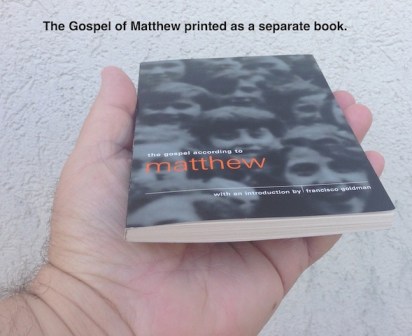
Is reading the Bible frustrating? The answer is yes — at least initially. Everyone who develops the habit of regular Bible reading struggles to find time to read. It becomes easier, but I still go through busy times in my life when I play catch up on my reading guide. We also need to keep things in perspective. None of the books of the Bible are very long. Most are pamphlet size if they were printed by themselves. Each of the gospels could be read aloud in about two hours. In comparison, one of the most recent John Grisham novels would take nearly 13 hours read aloud — the entire New Testament could be done in about 16 hours.

I think most new Bible readers do feel confused and struggle to understand. I liken my first time reading through the Bible with fishing with a net with holes six inches wide. You can catch a big fish with it — some of the big ideas in the text, but many things will pass right through. Fishing with such a net would obviously be frustrating. Each time through the Bible your net becomes finer, and you “catch” more of what is in the text.

I suspect that talking about the frustration of Bible reading seems a bit sacrilegious. After all, the Bible is God’s word. How can we complain about God’s word? Yet, I know of few things in life that don’t entail a learning curve especially if they are worth doing. Admitting our frustrations is the first step in moving beyond them. Knowing that others have felt the same way in their journey can help us work through our own frustrations. Believe me when I say the journey is worth it.

1http://www.logos.com/press/releases/free-esv-bible. Note that the press release is about a free ESV Bible for iOS, Android, or Kindle Fire mobile devices. The free offer is good through August 10th. Use the press release link to find the offer. Logos is one of the Bible apps that I personally use on my iPad, and free is hard to beat.


The Ghost in the Machine

July 26, 2013

The problem with materialism as a world view is that it reduces what it means to be human. If we are no more than a biological machine, can we trust our thoughts? Are our actions a matter of free will? Some evolutionary biologists have in fact embraced determinism. Is there a self that goes beyond the programming of the electrochemical impulses of our bodies?

Reductionism is a fine intellectual game to play, but it is very difficult to live consistently. An episode of the British crime show, Inspector Lewis, illustrates the tension. Detective Inspector Robbie Lewis is the no-nonsense policeman. His partner is Detective Sergeant James Hathaway. Hathaway is the intellectual who provides the show’s dialogue with the needed literary or classical music reference. Before becoming a detective. he had been a theology student at Cambridge. In the episode, “Fearful Symmetry,” there are two exchanges that I found intriguing.

A young Oxford student has been killed, and the detectives must visit the lab of Dr. Ezrin, a biologist.

Hathaway: What do you actually study here, Dr. Ezrin?

Dr. Ezrin:The parts of the brain relating to learning. – how data is imprinted and stored in the memory. Anything you’ve ever felt is down to microscopic variation in the electrochemical balance in here (pointing to his brain). Everything we are – love, hate, anger, jealousy, desire…

Hathaway: And the soul?

Dr. Ezrin: Sorry, there is no ghost in the machine. When the machine stops, we stop.

Later the detectives learn that after an affair Dr. Ezrin has been stalking a woman who has a connection to their murder case. He has even broken into her apartment.

Lewis: You’re aware, Dr. Ezrin, that stalking is an offense?

Dr. Ezrin: I’m not a stalker. Look I went to her place once or twice … just as a… I don’t know. I was jealous.

Hathaway: Those electrochemical impulses can be a nuisance.

Hathaway’s quip accents the problem of reductionism. None of us explain our behavior away by saying my electrochemical impulses made me do it. Especially when we are in the wrong, we give reasons why in this case, our behavior is allowable and understandable. All of us in conversation assume that there is a self that is above the electrochemical impulses going on in our brains. Historically, that self is called the soul. All of us behave as if there is a “ghost in the machine” despite what we may say intellectually.


What Is Faith?

July 19, 2013

Since the wages of sin is death, it is very important to know how to receive the free gift which is eternal life. Paul begins Romans with this great statement of his theme: “For I am not ashamed of the gospel, for it is the power of God for salvation to everyone who believes, to the Jew first and also to the Greek” (Romans 1:16, ESV). The gospel is clearly offered to all, but faith is a condition for receiving the gift. If the gospel was not offered to all, Paul could not claim, “For God shows no partiality” (Romans 2:11, ESV).

So what is faith? In English, we speak of belief, faith, and trust. Greek had one word group that covered that range of meaning. Belief or faith includes intellectual assent. Intellectual assent can especially be seen in phrases like “believe that”.

And without faith it is impossible to please him, for whoever would draw near to God must believe that he exists and that he rewards those who seek him. Hebrews 11:6, ESV

You believe that God is one; you do well. Even the demons believe- and shudder! James 2:19, ESV

The last quote clearly indicates that intellectual assent is not enough. The Bible also speaks of faith in the sense of trust. This can be seen in phrases that say believing in or on someone (e.g., “the righteousness of God through faith in Jesus Christ for all who believe” Romans 3:22, ESV).

Paul is also clear about how we acquire faith. “So faith comes from hearing, and hearing through the word of Christ (Romans 10:17, ESV). Faith is a response to testimony (see also John 20:30-31). Those who would argue from Ephesians 2:8 that faith is a gift have missed the point. The “this” in the passage points back to the whole process of salvation by grace conditioned by faith as clearly seen in the Greek grammar of the passage.

In Romans, Paul contrasts faith/trust with works/merit. We are either going to earn salvation by perfect law keeping, or we are going to have to trust in the saving work done for us by Christ. But perfect law keeping is only hypothetically possible since we can’t live it perfectly. “For by works of the law no human being will be justified in his sight, since through the law comes knowledge of sin” (Romans 3:20, ESV). We must trust what Jesus has done for us.

As Paul explains this faith/trust, it does not exclude but includes repentance (Romans 2:4). It does not exclude but includes baptism (Romans 6:3). It does not exclude but includes confession (Romans 10:9). Given the argument of the letter, these things that Paul includes cannot be meritorious works but must be expressions of trust/faith. Finally, also note that for Paul faith/trust leads to obedience (Romans 1:5, 6:17, 16:26). Obedience is produced by faith. The person who trusts God will want to obey God.


The Misunderstood Commission

July 12, 2013

If I were to give you their names, you probably wouldn’t recognize the list: Shammua, Shaphat, Igal, Palti, Gaddiel, Gaddi, Ammiel, Sethur, Nahbi, and Geuel. Add two more names, Joshua and Caleb, and many Bible students would suddenly have a flash of recognition – the twelve spies.

The setting is after the Exodus from Egypt. Israel is in the wilderness. They are camped outside the Promised Land. The spy mission is God’s idea: “Send men to spy out the land of Canaan, which I am giving to the people of Israel” (Numbers 13:2, ESV). Moses also states their commission:

Go up into the Negeb and go up into the hill country, and see what the land is, and whether the people who dwell in it are strong or weak, whether they are few or many, and whether the land that they dwell in is good or bad, and whether the cities that they dwell in are camps or strongholds, and whether the land is rich or poor, and whether there are trees in it or not. Be of good courage and bring some of the fruit of the land. Numbers 13:17-20, ESV

It is interesting to note that in the commissioning of the spies the issue is never whether we can take the land or not. Taking the land is a given. God has promised.

The ten spies failed not because they reported strong peoples and fortified cities in the land. Their failure was saying, “We are not strong enough; we can’t do it.” The issue had never been Israel’s strength. The issue always was God’s strength, and what could be accomplished by faith. They misunderstood their commission.

We too have a commission – a great one in fact. It is about going into all the world, making disciples, baptizing, and teaching. It would be failure for us to say, “We are not strong enough; we can’t do it.” It is not about our strength. It is about God’s strength, and what can be accomplished by faith. For this commission too comes with a promise: “And behold, I am with you always, to the end of the age” (Matthew 28:20, ESV).


Peace LIke a River

July 5, 2013

With what are God’s requirements to be compared? Is God like a cosmic-Simon-says who is attempting to trip us up? Or is God more like a parent setting limits for the protection of his children? Listen to the instruction of Moses in Deuteronomy.

And the LORD commanded us to do all these statutes, to fear the LORD our God, for our good always, that he might preserve us alive, as we are this day. (Deuteronomy 6:24 ESV)

God is not a killjoy. His commandments are for our good, for our benefit. I’ve witnessed too many times people who rebelliously go their own way making a train wreck of their lives. Even my own experience tells me that the instructions of scripture are good for me (even when temptations want to lead me another direction). Blessings come from the path of righteousness.

Moses had warned Israel of this, but despite this warning, Israel paid for their stubbornness with the Babylonian captivity. Judgment came against them. In the midst of prophesying judgment, Isaiah pictured God’s lament that it could have been very different if they had listened.

This is what the LORD says–your Redeemer, the Holy One of Israel: “I am the LORD your God, who teaches you what is best for you, who directs you in the way you should go. If only you had paid attention to my commands, your peace would have been like a river, your righteousness like the waves of the sea” (Isaiah 48:17-18, NIV).

They could have had peace like a river. The land of Israel does not have many rivers. The land is semiarid with only marginal rainfall in many places. The land does have numerous wadis or dry riverbeds that flow with the runoff from the rains, but those are not constant. The image of a river is a picture of abundance. They could have had peace that was abundant and constant — peace like a river.

Righteousness could have characterized their lives so that it was like waves on the shore. Waves are rhythmical and repetitious. There is always a new wave coming to shore. Again, we see a picture of abundance. What is it like to live in a community where righteousness is the norm — a place where you expect it just like you do the next wave?

What about us? Do we stubbornly go our own way only to reap the consequences of our sinful decisions, or do we have peace like a river? Let us discover the blessings of a humble walk with God.


Don’t Smoke the Book of John

June 28, 2013

Why are our Bibles so portable? The Bible is a library of sixty-six books. In scrolls, it would be difficult to impossible to carry around. The book form or codex was introduced to the world in the first century. By the second century, we have evidence that the codex became the preferred format for early Christians.

The book format allows a lot of material to be carried in a handy size. The last page of Revelation in my Bible is on page 1252, yet it is only about an inch and half thick. A best-selling novel of 650 pages can be nearly two inches thick. Why are our Bibles as thin as they are? Most Bibles are printed on thin paper.

That leads us to the odd news. The German Bible Society distributes about 400,000 Bibles per year. According to Felix Breidenstein, the society’s business manager, the Chinese craving for cigarettes is driving up the price of Bible production. The rising demand for cigarette paper in China means stiffer competition for the thin paper used in Bible printing. So if you need another reason to quit smoking other than it can kill you, it also drives up the price of Bibles.

Bible paper and smoking have another link. Prisoners have on occasions used pages of the Bible to roll their own cigarettes. The World Bible Translation Center tells one such story. Thirty years ago a prisoner was using his Bible to roll cigarettes. Another inmate squealed on him. But surprisingly, the chaplain gave the man another copy of the Bible. But he left with this admonition: “Don’t smoke the book of John.”

The prisoner continued to roll cigarettes, but respected the charge. He didn’t smoke the gospel of John, but began to read. He learned of God’s great love in sending His Son. He learned of the choice between eternal life and perishing, and he chose life. The prisoner was converted and now serves as chaplain at three different jails in Texas. He recently baptized 15 and has distributed 300 Easy-to-Read New Testaments in the past year.

How odd that Bibles and cigarettes are in competition for the same paper! China attempts to restrict religion to government-authorized religious organizations and registered places of worship. Persecution exists. My prayer for the Chinese is that they also discover the best use of thin paper – the Bible.


Wallets that Never Wear Out

June 21, 2013

Wallets, billfolds, purses – we probably all have one. They are the place where we put our money, credit cards, driver’s license and ID cards. They are necessary things that take a tremendous amount of wear and tear.

Wallets wear out. I can remember the transfer from a worn out one to a new one. The old wallet’s leather was worn and discolored. It had never quite recovered from the amusement park water ride. Emptied it looked kind of like a shed snake’s skin – still having some of the shape of its former occupants, but looking very lifeless.

But worse that wearing out – money disappears from them at blinding speed. I’m reminded of Proverbs 23:5: “Cast but a glance at riches, and they are gone, for they will surely sprout wings and fly off to the sky like an eagle” (NIV).

How would you like a wallet that never wears out? It’s a special wallet that never loses its contents. Is it some special new super cowhide with SuperGlue inside? No, this special offer isn’t found on the shopping channel, but from Jesus himself.

And do not set your heart on what you will eat or drink; do not worry about it. For the pagan world runs after all such things, and your Father knows that you need them. But seek his kingdom, and these things will be given to you as well.

Do not be afraid, little flock, for your Father has been pleased to give you the kingdom. Sell your possessions and give to the poor. Provide purses for yourselves that will not wear out, a treasure in heaven that will not be exhausted, where no thief comes near and no moth destroys. For where your treasure is, there your heart will be also. Luke 12:29-34, NIV

It’s a paradox. What I give as a Christian is what I truly get to keep. What I accumulate for myself will ultimately go to another, “naked I came from my mother’s womb, and naked I will depart” (Job 1:21). Thomas Fuller states another paradox, “Riches enlarge rather than satisfy appetites.” Somewhere along the way, I must learn that satisfaction and contentment come from another source than more things. As Jesus said, “It is more blessed to give than to receive” (Acts 20:35). Do I have an eternal wallet or simply one that will wear out?


Fatherhood Is Important

June 14, 2013

Fatherhood is on-the-job training. To drive a car, I went through driver’s training and had to pass a test to receive a license. I must confess there are times when I see or read about certain cases, that I think this person shouldn’t have been allowed to procreate without passing a test. But real life doesn’t work that way. We become fathers and then muddle through with on-the-job training.

Resources, however, do exist to aid us. I’ve been blessed with some wonderful examples of Christian manhood and fatherhood. We learn a great deal from seeing it done well. (I suspect that some of the cases in the previous paragraph that I wish had needed a license lacked good role models in their lives.) There is a place for the older to train the younger, to share with the younger.

Books and magazine articles can also help. As a young man, I learned a lot about fatherhood from the books of James Dobson as many of my generation did. The books giving the developmental stages of childhood were also very helpful. It helps to know what to expect at 6 months, a year, and so on. But the greatest help, if we will let it, is the Bible. It contains wisdom: wisdom for being a father, wisdom for life, and wisdom for salvation.

Fatherhood is not always perfect, but it should be principled. I learned there were times I needed to apologize to my children. I’m sure there were a lot of things I could have done better, but I hope there were some principles reflected in my imperfect portrayal of a father. The principle to provide for and protect my family. The principle to love my wife, their mother, as Christ loved the church. The principle to raise our children in the discipline and nurture of the Lord. The need to love my children and be there for them.

Fatherhood is a time sensitive role. Yes, it involves on-the-job training, but there is a real need that we get it together for our children. They are only with us for a short time. Eighteen years seems like a long time until you are in the midst of it. First tooth, first word, first step, first day of school, and all those other firsts pass quickly. Much of what we teach about morality is learned in the first six years. Much of what we teach about spirituality is learned in the first twelve years. Fatherhood is time sensitive.

Fatherhood is a life long role. If you have done your job reasonably well, the relationship with your adult children is a wonderful and rewarding season of life. In most cases, it also leads to a new role: grandfather. May God bless the fathers among us. Fatherhood is important.


“Hasten the Day”

June 7, 2013

Peter makes an intriguing appeal “You ought to live holy and godly lives as you look forward to the day of God and speed its coming” (2 Peter 3:11-12, NIV). Of interest is the word that the NIV has rendered “speed.” A quick survey of translations indicate two possibilities: (1) hasten or speed the day or (2) eagerly desire the day.

  • “hastening” (ESV, NASB, NKJV, NRSV and NET), “speed” (NIV),
  • “eargerly” (NIV margin, Hugo McCord), “earnestly desiring” (NRSV, ASV), “earnestly desire” (HCSB), “look forward” (NCV)

The Greek word “speudō” has both meanings. Those who favor “hastening” point to Jewish background, although the IVP Background Commentary notes that the rabbis were divided on the issue of whether Israel’s repentance and obedience sped up the day. “Hastening” would suggest that we speed the coming of that day by our repentance, evangelism, and prayers. Those who favor “eagerly desire” find it the simpler solution because it doesn’t involve human behavior affecting the timing of the end. Although I’ve tended to favor the second choice, I must confess the difficulty of the options.

However, I don’t want to get lost in the “trees” of this passage and miss the grandeur of the “forest”. As you read 2 Peter 3, it is apparent that Peter wants us to be prepared for the Day. It will arrive “like thief in the night.” We know it’s coming, but we don’t know when. This world will be destroyed, but Christians hope for better things. In the meantime, we must live holy lives knowing that our future home is where righteousness dwells.

Yet what may be most challenging to 21st century American Christians is the eager anticipation of that Day. What is apparent in the chapter is an eager anticipation regardless of translation choice in 3:12. First century Christians were excited with longing for Jesus’ return. It didn’t mean they checked out from this world. Preparations needed to be made. People needed to be reached. As C.S. Lewis has aptly quipped, “Aim at heaven and you will get earth thrown in. Aim at earth and you get neither.”

We are in need of reminders to aim at heaven. The busyness and comfort of this life may cloud our vision. Would we pray with Paul, “Our Lord, come!” (1 Corinthians 16:22)? Or would our lifestyle proclaim, “O Lord, wait!”? Our attitude to the day has an effect on our lifestyle. Somehow, the companions of eager desire are holinesses and reverence. May we eagerly desire the day of God!


In Herod’s Jail

May 31, 2013

I wonder what John the Baptist pondered in Herod’s jail. It doesn’t seem quite fair. If anyone had ever lived a self-sacrificing, dedicated life, it was John. God set him apart even before birth. He was not to drink wine or strong drink possibly suggesting a perpetual Nazarite vow (Luke 1:15, on Nazarite vows see Numbers 6). His life was at best ascetic. His clothes remind us of Elijah – camel’s hair clothing and a leather belt (Mark 1:6, 2 Kings 1:8). His food was locusts and wild honey. Even Jesus referenced his austerity: “What then did you go out to see? A man dressed in soft clothing? Behold, those who wear soft clothing are in kings’ houses” (Matthew 11:8, ESV).

It was from prison that John the Baptist sent his disciples to Jesus to ask, “Are you the one who is to come, or shall we look for another” (Matthew 11:3, ESV )? We long for Jesus just to say “yes”. Instead, he answers about the blind seeing, the lame walking, the lepers cleansed, the dead raised, and the poor hearing good news. To this he adds, “And blessed is the one who is not offended by me” (Matthew 11:6, ESV). The first century world had many who claimed to be the One. False “messianic” uprisings had led some astray. Rather than an easily offered “yes,” Jesus recounted evidence to one in prison who may have been struggling with the purposes of God in the world. Was John’s subtext something like this? If you are the coming King, will you make things right soon… like getting me out of prison?

After John’s disciples left, Jesus acknowledged the greatness of John. John was the “Elijah to come” the fulfillment of Malachi chapter four, “yet the one who is least in the kingdom of heaven is greater than he” (Matthew 11:11). John prepared the way for the coming King and his Kingdom, yet he would die before the day arrived. Beheading at a tyrant’s whim doesn’t seem quite fair. Like Moses, John the Baptist could only look at the promised from afar.

Life can be disorienting. Pondering God’s ways can leave us questioning. Real life doesn’t always work out the way we think it should. But John the Baptist’s case is also paradoxical. It is in his suffering, sacrifice, and even death that we see the depth of his faith. It is his worst of times that provides us the greatest instruction.

Life can be disorienting, and our questions perplexing. But faith can anchor us to the God who is there, even when life doesn’t work the way we think it should. God’s ways are not our ways, yet it is He who has promised someday to wipe away all tears. I wonder what John the Baptist pondered in Herod’s jail.